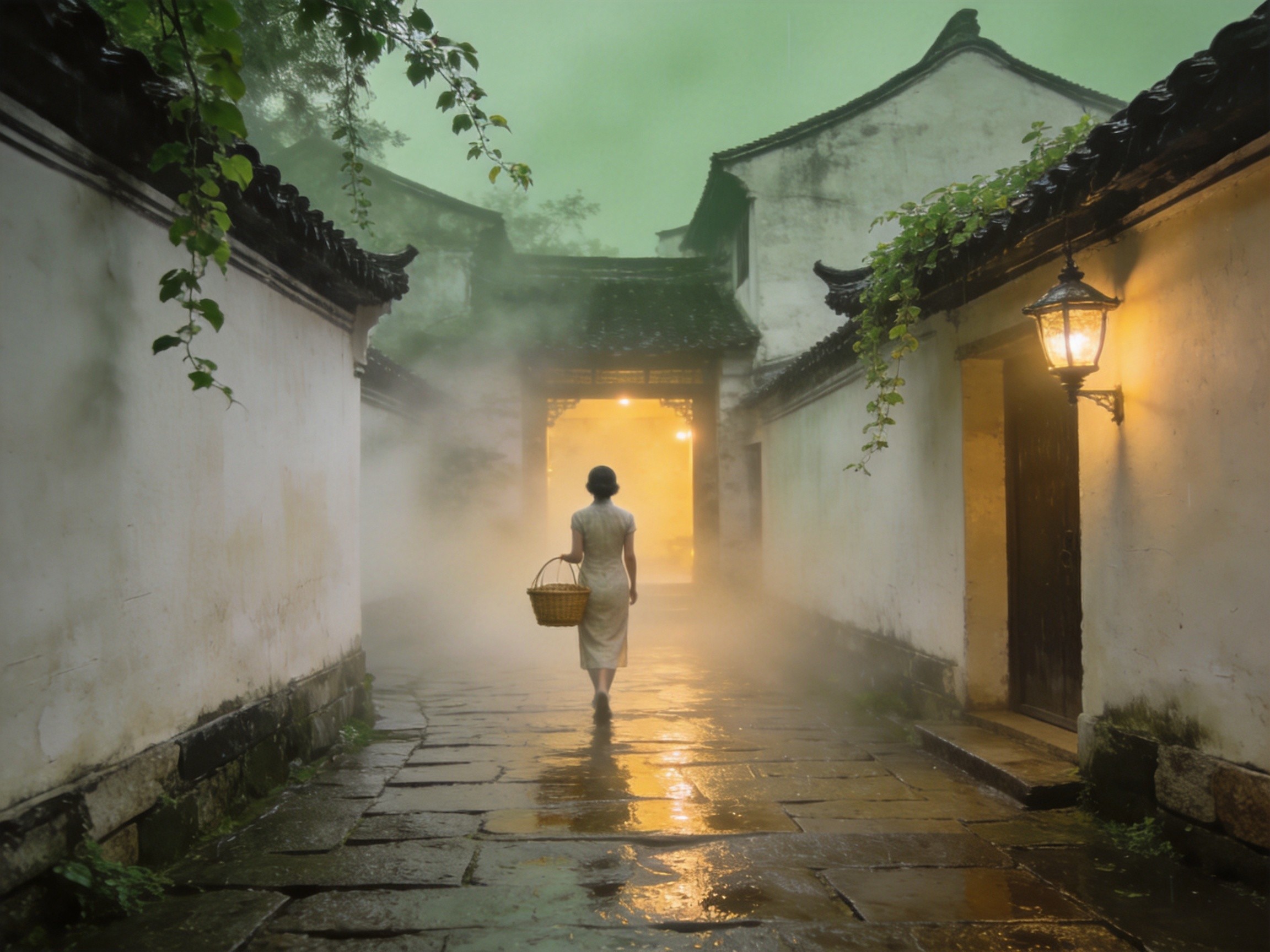
Jingmai Mountain was inscribed as a World Cultural Heritage site in 2023 — China's first tea-themed World Heritage listing, and one of the few ten-thousand-mu ancient tea forests still guarded by the people who live in it. The Blang have known how to plant tea on this mountain since the Tang dynasty. They believe every tea grove has its own spirit, and each year they hold a festival to honour the tea ancestors. Villages, Buddhist temples, ancient tea groves and forest are nested one inside another, forming a living example of "forest and tea together, people and land together": no weeding under the trees, no spraying, and the forest's own cycles keep everything alive.
We stay three nights in Wengji, an old Blang village in Mangjing. At five in the morning you watch mist rise out of the ancient groves in layers; you climb the hill once with a Blang girl to pick tea; you visit the Dai temple that honours the tea ancestor Pa Aileng; and you drink this year's spring tea beside a hearth. What is sold here has never been the two words "ancient tree" — it is an entire way of living that is still running.
The road up the mountain has been repaired in recent years, but there are still many bends; allow about three and a half hours from Pu'er city. The best season is October to April, when the dry weather keeps the mist thin and the roads good. From May to September the ancient groves are at their greenest, but it is the rainy season — humid, with leeches about. Accommodation in Wengji is mostly simple guesthouse, and a pair of shoes that can handle mud is a good idea.
Want to add Jingmai Mountain to your journey?
Tell us your dates and preferences, and we will tailor the journey around them.
Enquire →